Health Monitoring and Epidemiological Surveillance in the Kurdistan Region of Iraq
An international initiative funded by the Kurdistan Regional Government and the Italian Cooperation Agency, the KRG-HIS project supports the development of a health monitoring and epidemiological surveillance system in the Kurdistan Region of Iraq. ZK Company, based in the Kurdistan Region, supports the project by handling its logistics within the region.
The initiative began in June 2015 as a pilot project coordinated by the University of Rome Tor Vergata, with the involvement of the Italian Ministry of Foreign Affairs, the Kurdistan Regional Government, and the companies Informapro Srl, EuResist Network GEIE and ItalConsult s.a.s. The project brings together academic expertise, technical support and the participation of local health authorities to support the routine collection and use of health information.
ZK Company’s Role in Local Logistics
ZK Company provides local logistical support for the project’s implementation in the Kurdistan Region of Iraq. Its involvement supports the practical delivery of project activities within the region, alongside the work of the university, technical partners and local healthcare institutions.
Local logistics form an essential part of a project involving health facilities across several governorates, repeated field missions and training activities for healthcare personnel. Within this framework, ZK Company supports the logistical arrangements needed to carry out project activities in Iraqi Kurdistan.
The company’s role complements the scientific coordination provided by the University of Rome Tor Vergata and the technical contributions of the project partners. Together, these contributions support the implementation and continued development of the regional health information system.
A Shared Platform for Health Information
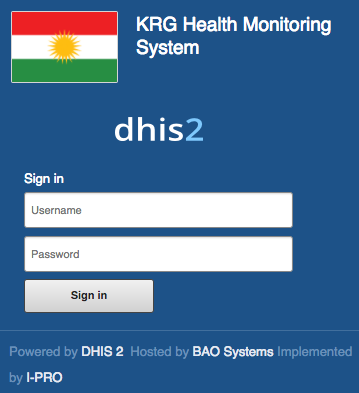
The KRG-HIS system uses the DHIS2 platform to collect and organise routine health data. The platform allows participating health facilities to record information electronically and supports the classification of diseases using internationally recognised terminology.
Accessible through computers and mobile devices, the system provides a shared environment for recording and reviewing health information. Its records include clinical events, outpatient visits, hospitalisations, births and deaths, contributing to a broader understanding of health conditions across the region.
Informapro contributes to the development of the health monitoring system in collaboration with DHIS2 developers and the wider project team. The involvement of local healthcare professionals and health authorities remains central to its implementation, as the system depends on the regular collection of information from participating facilities.
Training and Capacity Development
Training is a central component of the project. Activities are designed for healthcare professionals and statistical personnel, with a focus on the implementation of health information systems, the International Classification of Diseases and epidemiological surveillance.
Since the pilot phase, project missions have combined training sessions, visits to health facilities and discussions with the Kurdistan Regional Ministry of Health and Directorates of Health. These activities have supported the introduction of the platform, the activation of participating facilities and planning for further expansion.
Training materials have also been developed to support local users. During the COVID-19 pandemic, video resources were produced and made available to help sustain learning when travel and in-person activities were restricted.
From Pilot Implementation to Regional Expansion
Following the initial pilot phase, the project progressed through successive stages of implementation. Early missions between 2015 and 2017 focused on introducing DHIS2 and disease classification, testing the system, activating pilot centres and reviewing the next steps with regional health authorities.
In August 2017, the Italian Agency for Development Cooperation approved funding for a further three-year implementation period, together with the University of Rome Tor Vergata and the Kurdistan Regional Ministry of Health. Activities undertaken in 2018 and 2019 supported the expansion of coverage, further staff training and engagement with health directorates and medical centres.
The project continued operating during the COVID-19 pandemic, although restrictions limited visits and the addition of new facilities. Local staff maintained their involvement, and new centres in Duhok and Halabja began recording surveillance data in December 2020.
By December 2022, the system had recorded more than 2.3 million clinical events, outpatient visits, hospitalisations, births and deaths. This historical milestone reflected the growing volume of information available to describe health conditions in the Kurdistan Region.
Cooperation Supporting Continued Implementation
The KRG-HIS project combines international cooperation with local participation. Academic coordination, technical development, the engagement of health authorities and the daily contributions of healthcare personnel all support its continued implementation.
Within this partnership, ZK Company contributes through its handling of project logistics in the Kurdistan Region of Iraq, supporting the practical work required to deliver activities locally and sustain the project’s implementation.